


There’s more than one way to build your credentials as a professional dog trainer. Professional education can give you the knowledge and practical skills to start working with clients, while experience and additional certifications can help demonstrate your professional development as your career grows.
But not all dog trainer credentials mean the same thing, and there isn’t one certification every trainer is required to hold.
In this guide, we’ll break down the education, credentials, and certification options you may encounter throughout a dog training career and explain how each can fit into your professional development.
Is Dog Training a Good Career?
Dog training can be a rewarding and flexible career for people who enjoy working with dogs, teaching clients, and developing practical skills. Trainers can work independently, join established pet businesses, teach classes, specialize in particular areas of training, or build a business of their own.
According to the U.S. Bureau of Labor Statistics, animal trainers held approximately 47,300 jobs in 2024, with employment projected to grow 5% from 2024 to 2034. Entrepreneurship is also common: 39% of animal trainers are self-employed.
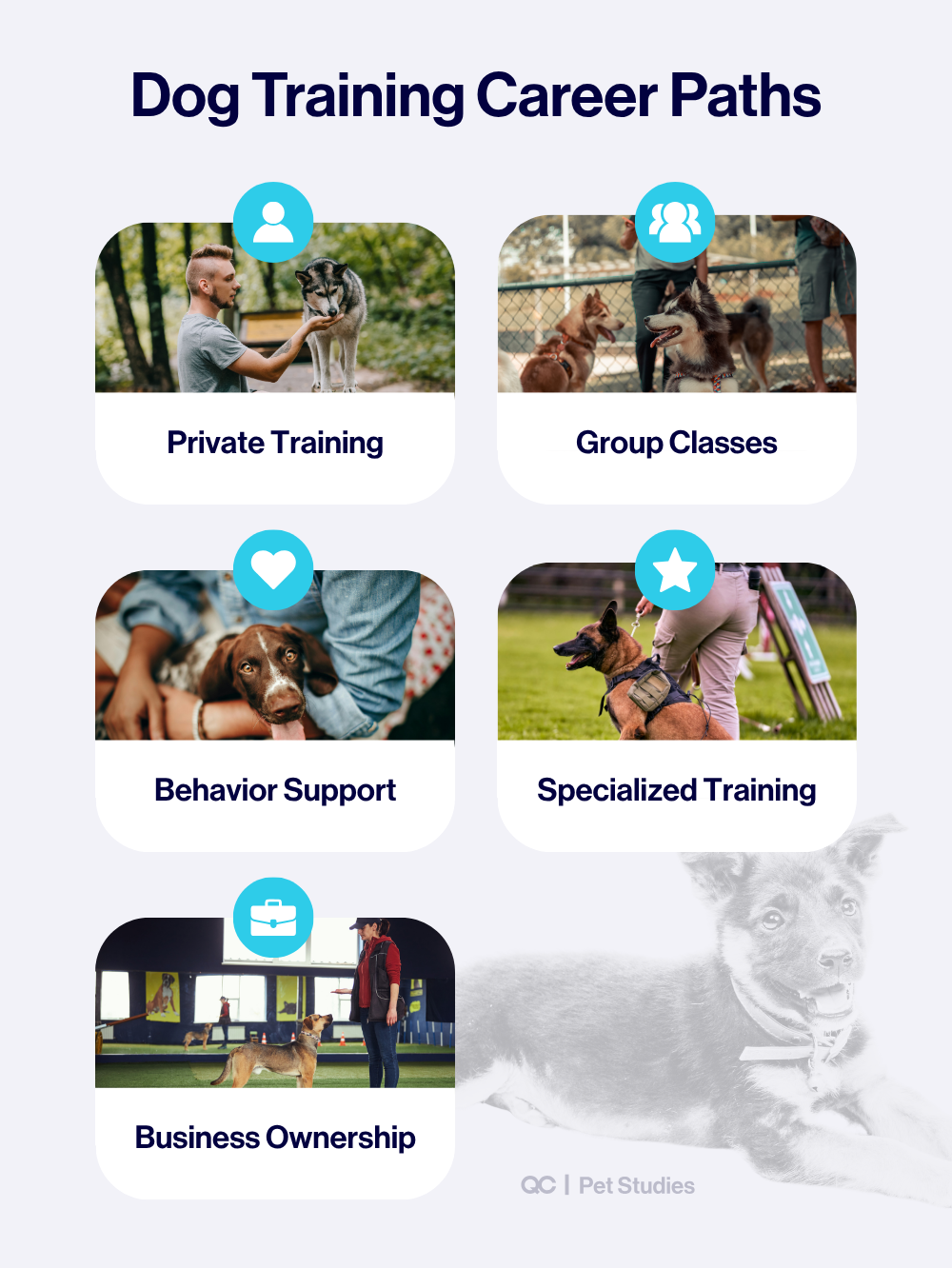
Professional dog trainers can build careers in areas such as private training, puppy and obedience classes, behavior support, scent work, board-and-train programs, established pet businesses, and independent training businesses.
What Does a Professional Dog Trainer Do?
A professional dog trainer teaches dogs new behaviors, helps address unwanted behaviors, and shows owners how to communicate and train more effectively.
Depending on their role, trainers may provide private lessons, puppy training, group classes, behavior support, scent work, board-and-train programs, or other specialized services.
But professional dog training isn’t only about working with dogs. Trainers also teach people.
Clients need to understand why a training technique works, how to use it correctly, and how to continue training between sessions. That means communication, client education, and problem-solving are just as important as hands-on training skills.
Can You Become a Dog Trainer Online?
Yes. You can complete professional dog training education online when the program combines theoretical learning with hands-on practice using real dogs.
QC Pet Studies’ Dog Training course combines self-paced online study with practical assignments. Students work with real dogs, submit videos demonstrating their training techniques, and receive personalized feedback from a professional dog training tutor.
For students who want additional experience in a professional setting, QC’s Externship Track also includes 40 hours working alongside an experienced professional dog trainer after the required coursework is complete.
”Instead of only writing about what you learned and how you would handle a situation, you also had to show that you could do it.
Tessa GorissenInternational Dog Training Professional™ (IDTP™)
How Long Does It Take to Become a Dog Trainer?
The time it takes to become a dog trainer depends on your education, study schedule, and professional goals. Initial professional education can take months, while your skills and experience will continue developing throughout your career.
QC’s Dog Training course is self-paced. Students can complete their training in as little as three months and have up to one year to submit their assignments.
Once you’ve completed your professional education, you can begin working with clients and continue building your experience from there.
For a complete breakdown of the process of entering the profession, read our step-by-step guide to becoming a dog trainer.
What Skills Do Professional Dog Trainers Need?
Professional dog trainers need a combination of canine behavior knowledge, practical training skills, problem-solving abilities, and strong communication skills.
Important skills and areas of knowledge include:
- Canine communication and behavior
- Canine development and socialization
- Learning theory
- Training methods
- Motivation and reinforcement
- Training tools
- Addressing unwanted behaviors
- Safe handling
- Teaching private and group lessons
- Communicating with dog owners
- Professional business practices
QC’s Dog Training curriculum covers these foundational areas while giving students opportunities to apply what they learn through practical assignments with real dogs.
Students also receive personalized tutor feedback throughout their studies so they can identify areas for improvement and continue developing their techniques.
Build the Skills to Train Dogs Professionally
Learn online, practice with real dogs, and get personalized feedback as you work toward your professional dog training certification.
Do You Need a Certification to Become a Dog Trainer?
There is no single certification that every professional dog trainer is required to hold. Different credentials can demonstrate professional education, practical training, knowledge, or industry experience.
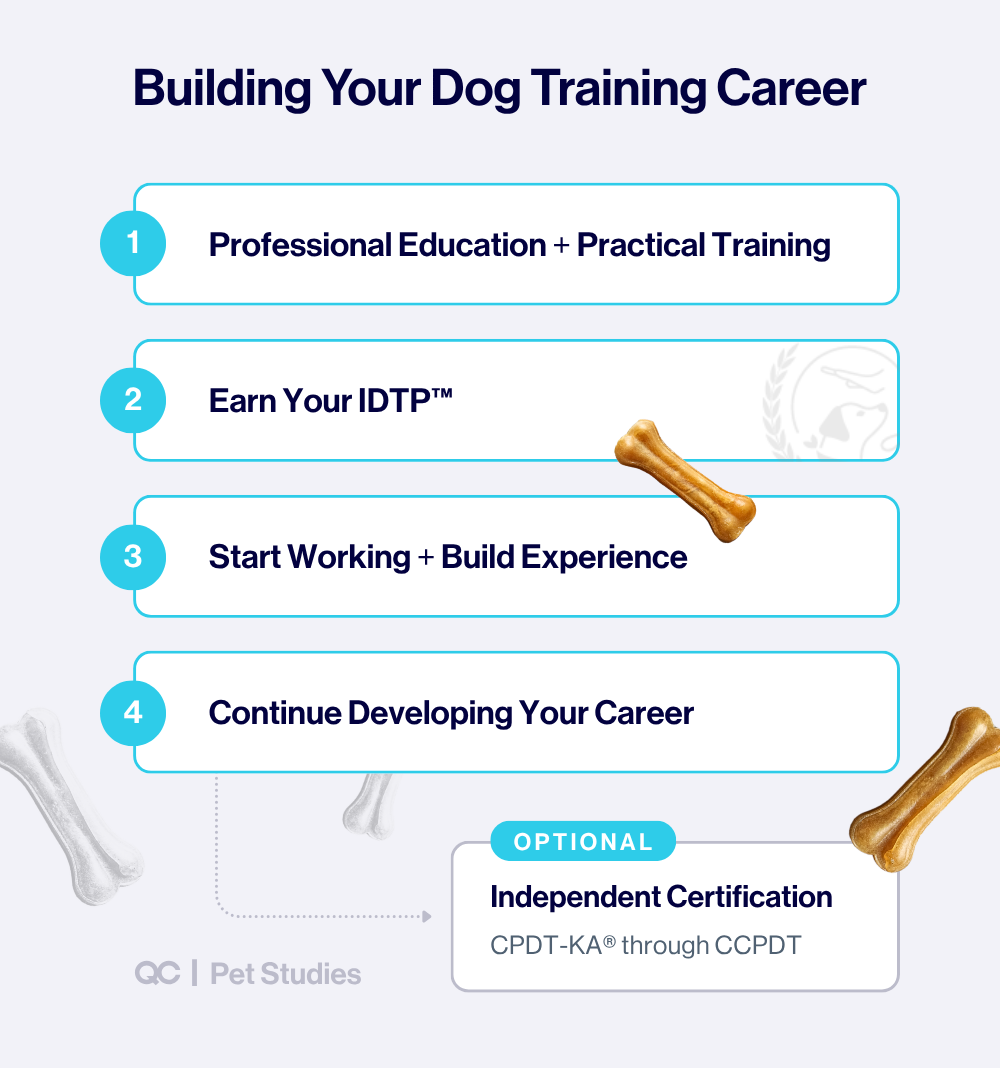
Graduates of QC Pet Studies’ Dog Training course earn the International Dog Training Professional™ (IDTP™) certification. The IDTP™ demonstrates completion of comprehensive professional education and practical training designed to prepare graduates to work professionally with dogs and their owners.
As trainers gain experience, they may also choose to pursue additional independent credentials. One option is certification through the Certification Council for Professional Dog Trainers (CCPDT).
These credentials serve different purposes, and you don’t need both to work as a professional dog trainer.
What Is the IDTP™ Certification?
The International Dog Training Professional™ (IDTP™) is the professional credential earned by graduates of QC Pet Studies’ Dog Training course.
Students earning their IDTP™ complete education and practical training in canine behavior, learning theory, training techniques, client instruction, and professional practice. They also demonstrate their skills through hands-on assignments with real dogs.
The IDTP™ prepares graduates to begin working professionally and does not expire.
What Is CPDT-KA® Certification?
The Certified Professional Dog Trainer-Knowledge Assessed (CPDT-KA®) is an independent professional certification offered by the Certification Council for Professional Dog Trainers (CCPDT).
CCPDT is an independent certifying organization for dog training and canine behavior professionals. Unlike an educational credential, CPDT-KA® certification is intended for trainers who have already accumulated professional dog training experience.
According to CCPDT’s eligibility requirements, candidates currently need to:
- Be at least 18 years old
- Have a high school diploma, GED, or equivalent
- Document at least 300 hours of dog training experience within the previous three years
- Submit an attestation from an approved professional
- Agree to CCPDT’s Standards of Practice and Code of Ethics
- Pass the CPDT-KA® examination
The CPDT-KA® exam consists of 200 multiple-choice questions covering areas including applied learning theory, instructional and teaching skills, canine behavior and ethology, and professional skills and ethics.
For experienced trainers who choose to pursue it, CPDT-KA® offers an independent way to demonstrate their professional knowledge.
Good to know: Hands-on dog training hours completed as part of QC’s Dog Training course can count toward the 300 hours of experience required for CPDT-KA® eligibility, subject to CCPDT’s eligibility and documentation requirements.
CPDT-KA® AT A GLANCE
300 hours of dog training experience required
200-question professional examination
Independent certification through CCPDT
Recertification every three years
What Is the IDTP™ Certification?
The International Dog Training Professional™ (IDTP™) is the professional credential earned by graduates of QC Pet Studies’ Dog Training course.
Students earning their IDTP™ complete education and practical training in canine behavior, learning theory, training techniques, client instruction, and professional practice. They also demonstrate their skills through hands-on assignments with real dogs.
The IDTP™ prepares graduates to begin working professionally and does not expire.
| IDTP | CPDT-KA® | |
|---|---|---|
| Organization | QC Pet Studies | Independent assessment of professional knowledge |
| What it demonstrates | Professional education and practical training | Independent assessment of professional knowledge |
| Prior professional experience required? | No | Yes, including 300 hours within the previous three years |
| How it's earned | Complete QC's coursework and practical assignments | Meet CCPDT eligibility requirements and pass the exam |
| Can it support a professional career? | Yes | Yes |
| Renewal | Does not expire | Recertification every three years |
You don’t need both credentials to work as a professional dog trainer.
The IDTP™ demonstrates the professional education and practical training you’ve completed to prepare for your career. CPDT-KA® is an optional independent certification that experienced trainers may choose to pursue as part of their continued professional development.
For trainers who choose to hold both, the credentials can complement one another by demonstrating professional education and practical preparation alongside independent assessment of professional knowledge.
Does QC Pet Studies Prepare Students for the CPDT-KA® Exam?
Yes. QC’s Dog Training program covers many of the professional knowledge areas relevant to the CPDT-KA® exam and includes an optional CPDT Exam Prep unit.
QC’s curriculum covers areas such as learning theory, canine behavior, training methods, and teaching skills. The optional CPDT Exam Prep unit introduces the examination, provides preparation guidance, and includes a practice quiz.
The hands-on training hours students complete during the QC course can also count toward CCPDT’s 300-hour experience requirement. This means graduates who later decide to pursue CPDT-KA® certification may have already started accumulating qualifying experience during their professional education.
QC graduates do not need CPDT-KA® certification to use their IDTP™ or begin working professionally. However, for graduates who choose to pursue it, QC can provide both a strong knowledge foundation and a head start toward the experience requirement.
Candidates must still independently meet CCPDT’s full eligibility and documentation requirements before taking the exam.
Why Do Some Dog Trainers Pursue CPDT-KA® Certification?
Some experienced dog trainers pursue CPDT-KA® certification to add an independent assessment of their professional knowledge to their existing education and experience.
CCPDT’s certification process includes professional experience requirements, a standardized examination, professional standards, a Code of Ethics, and ongoing recertification requirements.
According to CCPDT’s recertification requirements, CPDT-KA® and CPDT-KSA® certifications must be renewed every three years.
For trainers who choose to pursue it, CPDT-KA® can complement their existing education and experience while supporting continued professional development.
Build a Dog Training Career That Grows With You
A successful dog training career is built through professional education, practical skills, experience, and continued learning.
Your first professional certification can give you the foundation to enter the field, but your development doesn’t stop there. As you gain experience, you can build new specialties, expand your services, continue your education, grow a business, or pursue additional credentials that align with your goals.
QC Pet Studies’ Dog Training course combines professional education with hands-on assignments, personalized tutor feedback, client instruction, and business training to help students prepare for professional work.
Ready to Start Your Dog Training Career?
Build your skills, practice with real dogs, and graduate with your IDTP™ certification.
Dog Training Methods: Frequently Asked Questions (FAQs)
Do you need a certification to become a dog trainer?
There is no single certification required for every professional dog trainer. Professional education and credentials can help demonstrate your knowledge and skills to clients and employers.
What is the most effective dog training method?
CCPDT stands for the Certification Council for Professional Dog Trainers. It is an independent certifying organization for dog training and canine behavior professionals.
What is CPDT-KA® certification?
CPDT-KA® stands for Certified Professional Dog Trainer-Knowledge Assessed. It is an independent certification offered by CCPDT to trainers who meet its professional experience and eligibility requirements and pass its examination.
How many hours do you need for CPDT-KA® certification?
CCPDT currently requires at least 300 hours of dog training experience within the previous three years before candidates can qualify for the CPDT-KA® exam. Hands-on training hours completed as part of QC’s Dog Training course can count toward this requirement, subject to CCPDT’s eligibility and documentation requirements.
Is IDTP™ the same as CPDT-KA®?
No. IDTP™ demonstrates completion of QC Pet Studies’ professional dog training education and practical training, while CPDT-KA® independently assesses the professional knowledge of trainers who meet CCPDT’s experience requirements.
Does QC Pet Studies Prepare Students for CPDT-KA® Certification?
Yes. QC’s Dog Training course covers many professional knowledge areas relevant to the CPDT-KA® exam, includes an optional CPDT Exam Prep unit, and provides hands-on training experience that can count toward CCPDT’s 300-hour requirement. Candidates must still independently meet CCPDT’s full eligibility requirements.
Do You Need CPDT-KA® After Earning Your IDTP™?
No. QC graduates can work professionally with their IDTP™ certification. CPDT-KA® is an optional independent credential that some trainers choose to pursue as their careers develop.

 CALL NOW 1-833-600-3751