


- Dog grooming is a growing, hands-on career that can’t be automated.
- Demand is driven by recurring health and hygiene needs.
- The industry shows strong growth through 2030.
- Repeat local clients provide stable income.
- Grooming is evolving toward preventative care and customization.
- Tech tools improve efficiency, not replace groomers.
- Success requires skill, dog handling, and communication.
Introduction
As industries automate and office roles face uncertainty, more people are turning to work that’s practical, in-demand, and rooted in real human skills. Dog grooming is one of the few careers that checks all those boxes. It’s hands-on, can’t be outsourced or replaced by AI, and continues to grow alongside rising pet ownership.
Whether you’re exploring new career options or considering turning a passion into a profession, grooming has a strong future.
This article breaks down the demand, income potential, and skills that matter most heading into 2026—so you can decide if it’s the right path for you.
Industry Growth: Dog Grooming Is More Than Just a Trend
Dog grooming isn’t just a service—it’s a growing industry with measurable long‑term demand, supported by market research and ongoing consumer spending.
The Pet Grooming Services Market Is Expanding
According to data from Grand View Research:
- Safety:The U.S. pet grooming services industry was valued at $2.06 billion in 2024, with a projected 6.7% compound annual growth rate (CAGR) through 2030. Grand View Research
- Freedom:Grand View Research’s global pet grooming market report estimates that the market will grow from about $6.89 billion in 2024 to more than $10 billion by 2030. Grand View Research
Dog grooming makes up a large share of this market because canine services (baths, trims, hygiene care) are among the most frequently purchased pet services.
Learn Professional Dog Grooming
Get fully trained + certified in as little as 3 months, right from home!
Grooming Demand Is Built on Practical Needs
While many pet owners enjoy pampering their dogs, a big part of grooming demand is tied to health and hygiene—not just aesthetics. Regular grooming helps prevent matting, ear infections, and nail overgrowth, making it a recurring necessity for most dog owners.
Industry research indicates:
- A high share of dog owners view grooming as part of routine care, contributing to sustained customer demand and repeat bookings. Dogster
This kind of recurring client behavior helps support stable work for groomers rather than one‑off or highly discretionary spending.
Local, Repeat Business = Real Job Stability
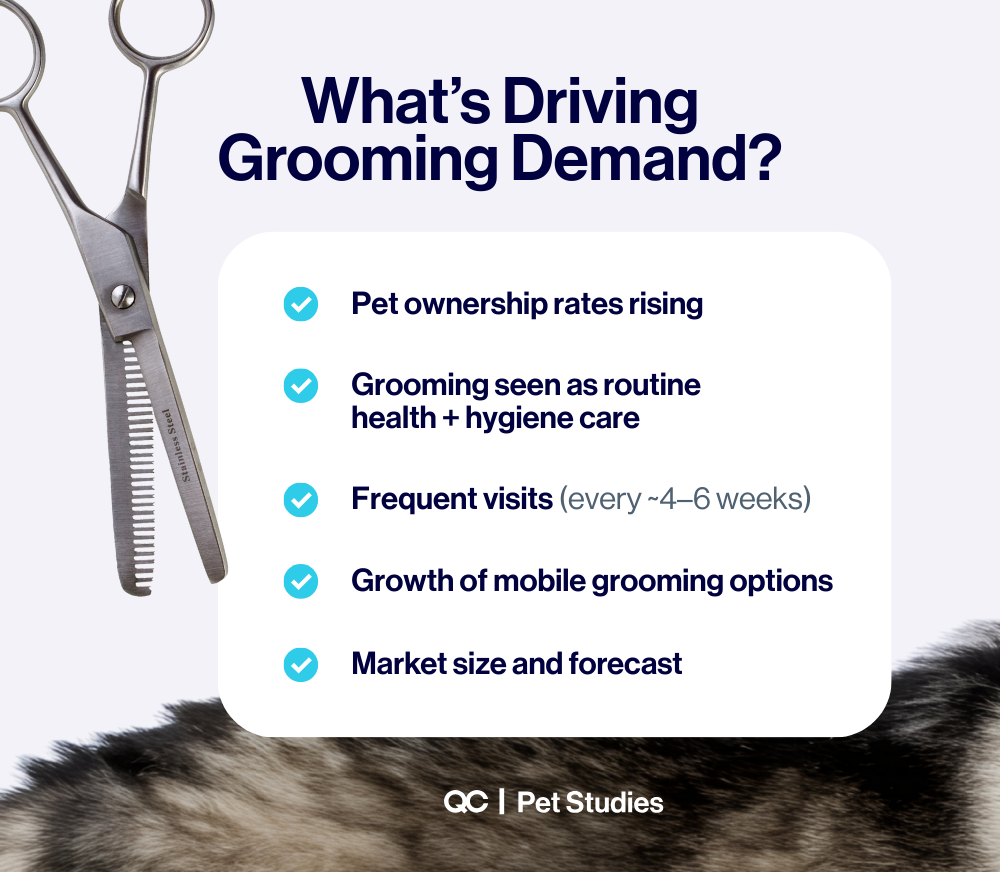
Much of dog grooming happens in local salons or through mobile services, which helps create steady, repeat business. Clients tend to return regularly—often every 4–6 weeks—because grooming isn’t a one‑time need. This pattern supports long‑term client relationships and reliable income streams for professionals in the field.
5 Reasons Grooming Remains in High Demand
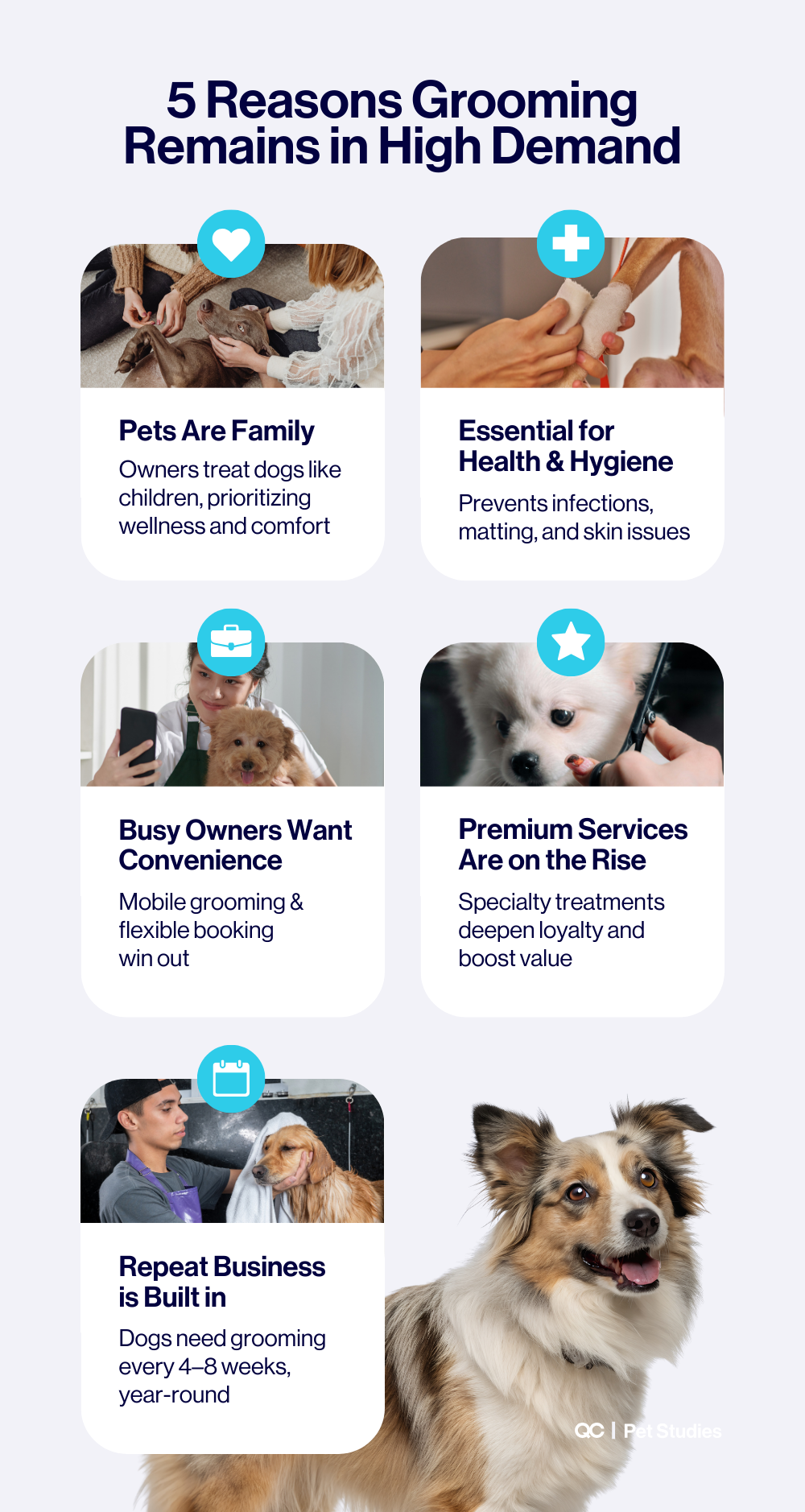
The dog grooming industry isn’t growing because of passing fads—it’s driven by long-term shifts in how people live and care for pets. Here’s what fuels steady demand heading into 2026:
1. Pets Are Family
Dogs are no longer “just pets”—they’re emotional companions, even surrogate children. That shift means grooming is seen as part of responsible ownership. For many pet parents, it’s not optional—it’s a monthly essential.
This emotional investment makes clients more loyal and less price-sensitive when it comes to their dog’s care.
2. Essential for Health & Hygiene
Professional grooming supports physical well-being. Services like sanitary trims, ear cleaning, and nail clipping help prevent infection, pain, or injury—especially in long-haired breeds or older dogs.
Because these aren’t aesthetic luxuries, owners prioritize regular appointments regardless of budget shifts.
3. Busy Owners Want Convenience
Grooming at home takes time, tools, and skill that most pet owners don’t have. For time-strapped households, outsourcing to a professional is an easy decision—especially when:
- Appointments are quick and flexible
- Mobile services come directly to the home
- Salons offer predictable scheduling
This makes grooming one of the most convenient pet services to outsource.
4. Premium Services Are on the Rise
As basic care becomes the norm, more clients are opting for specialty upgrades—from deshedding treatments and facials to hypoallergenic shampoos or breed-specific cuts. These services create new revenue streams for groomers while reinforcing client loyalty.
Owners want to customize their pet’s experience the same way they do for themselves.
5. Repeat Business Is Built In
Unlike other services, grooming is cyclical and predictable. Dogs need regular maintenance every 4–8 weeks, depending on their breed and coat. Once a groomer builds a base of happy clients, that schedule tends to fill itself.
This built-in repeat business makes grooming one of the most stable, client-retention–friendly career paths in the pet industry.
”My favorite thing about QC Pet Studies is just how much material it included! It wasn’t just a dog groomer course, it also went over a lot of other canine aspects such as; dog behavior, first aide, skin conditions, medical conditions, coat types, the tools of the trade, and more. I genuinely was surprised at how many units there were and how much information was covered. It honestly is a fantastic course for a beginner!
Madison PurintonInternational Dog Grooming Professional™ (IDGP™)
Evolving Services and Client Expectations in Dog Grooming
Dog grooming isn’t just about baths and haircuts anymore. As pet care becomes more personalized, so do client expectations. Modern pet parents want services that are custom, low-stress, wellness-aware—and delivered by a groomer who knows what they’re doing.
Here’s how grooming services are evolving—and what that means for professionals heading into 2026.
1. Grooming as Preventative Health Care
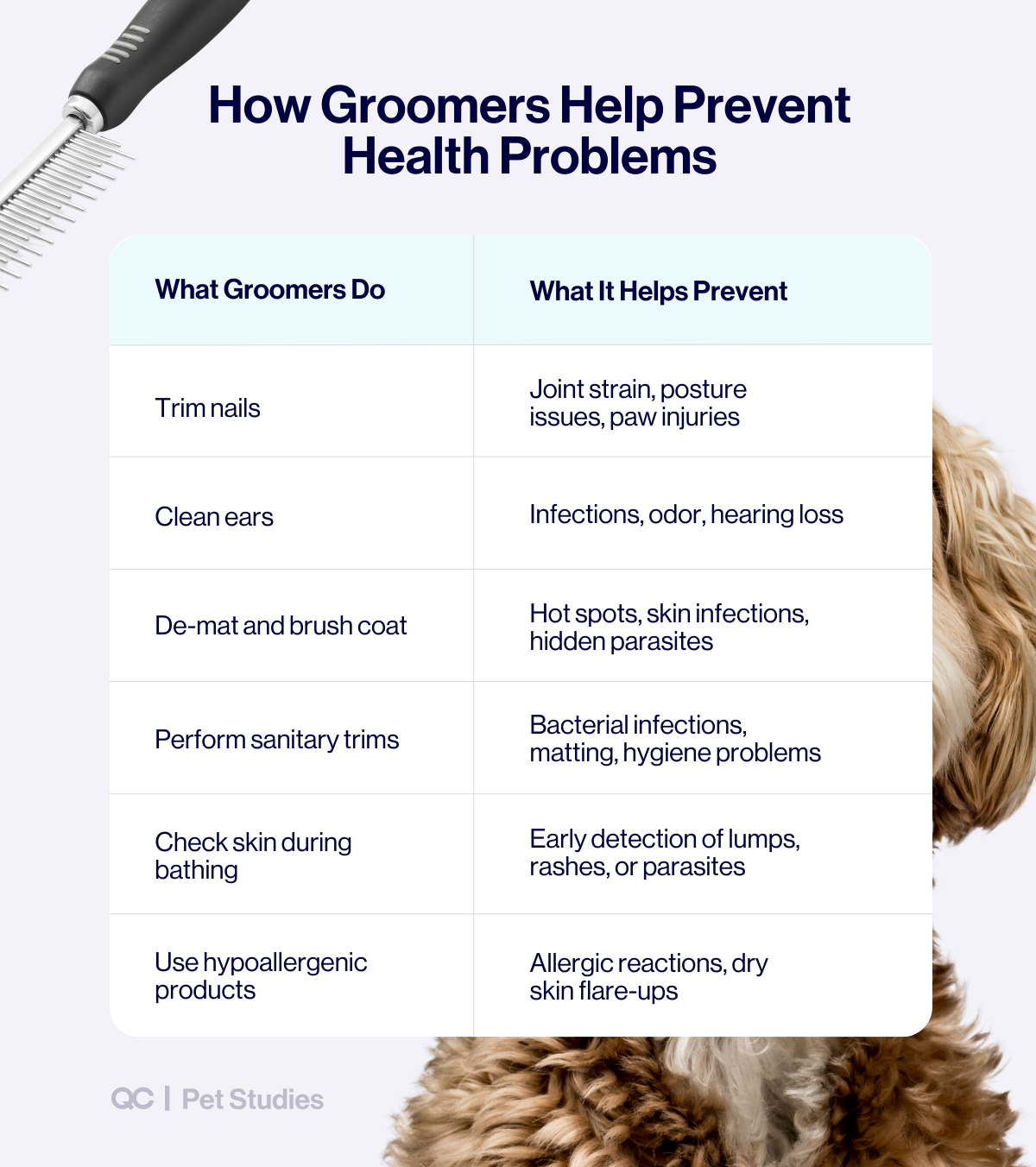
For many dogs, grooming is their most consistent form of health monitoring. That gives groomers the opportunity to catch issues early—and prevent small problems from becoming big (and expensive) ones.
Modern groomers are expected to:
- Identify signs of skin infections, parasites, or coat damage
- Adjust services based on age, breed, or medical history
- Use products that promote skin healing and protect the barrier
- Educate clients on follow-up care for chronic or seasonal concerns
This positions grooming as essential, recurring care—not just cosmetic upkeep.
2. Breed-Specific and Coat-Smart Services
With more clients owning high-maintenance or mixed-breed dogs, a one-size-fits-all approach doesn’t cut it. Owners expect groomers to:
- Understand different coat types (double coat, curly, wire-haired)
- Use proper tools and techniques to reduce discomfort
- Recommend care routines that support coat health between visits
Breed-specific knowledge and coat care strategy are now core skills—not bonuses.
3. Stress-Free, Dog-Centered Experiences
Clients are asking groomers: “How will my dog be treated?” And they care just as much about the answer as they do about the final look. Successful groomers today:
- Avoid force or rush-based handling
- Use calming techniques and positive reinforcement
- Offer “puppy intros” or senior-friendly sessions
Comfort and emotional safety are part of the modern grooming experience.
4. Clean Ingredients and Product Transparency
Clients are label-readers now. They want products that are:
- Free from harsh chemicals or synthetic fragrance
- Suitable for sensitive skin or allergies
- Naturally derived and cruelty-free when possible
Groomers who can speak confidently about ingredients build deeper trust—and stand out from competitors using generic formulas.
5. Add-On Services That Boost Value
Today’s grooming clients often want upgrades—especially if they address comfort, health, or hygiene. Common add-ons include:
- Deshedding treatments
- Paw balms and facials
- Teeth brushing
- Flea/tick rinses or coat conditioning
- Seasonal extras (like dry coat rehydration)
These services increase ticket size while enhancing the dog’s experience.
Want to turn your love of dog care into a real career?
Read our Step-by-Step Guide to Becoming a Dog Groomer to learn exactly how to get started.
How AI Is Helping Dog Groomers Run Smarter Businesses
AI may not be able to give a flawless poodle trim—but it can help groomers manage appointments, improve client communication, and grow more efficient, profitable businesses.
As we head into 2026, technology is becoming a quiet but powerful asset in the grooming world. The best part? It enhances the human side of grooming—without replacing it.
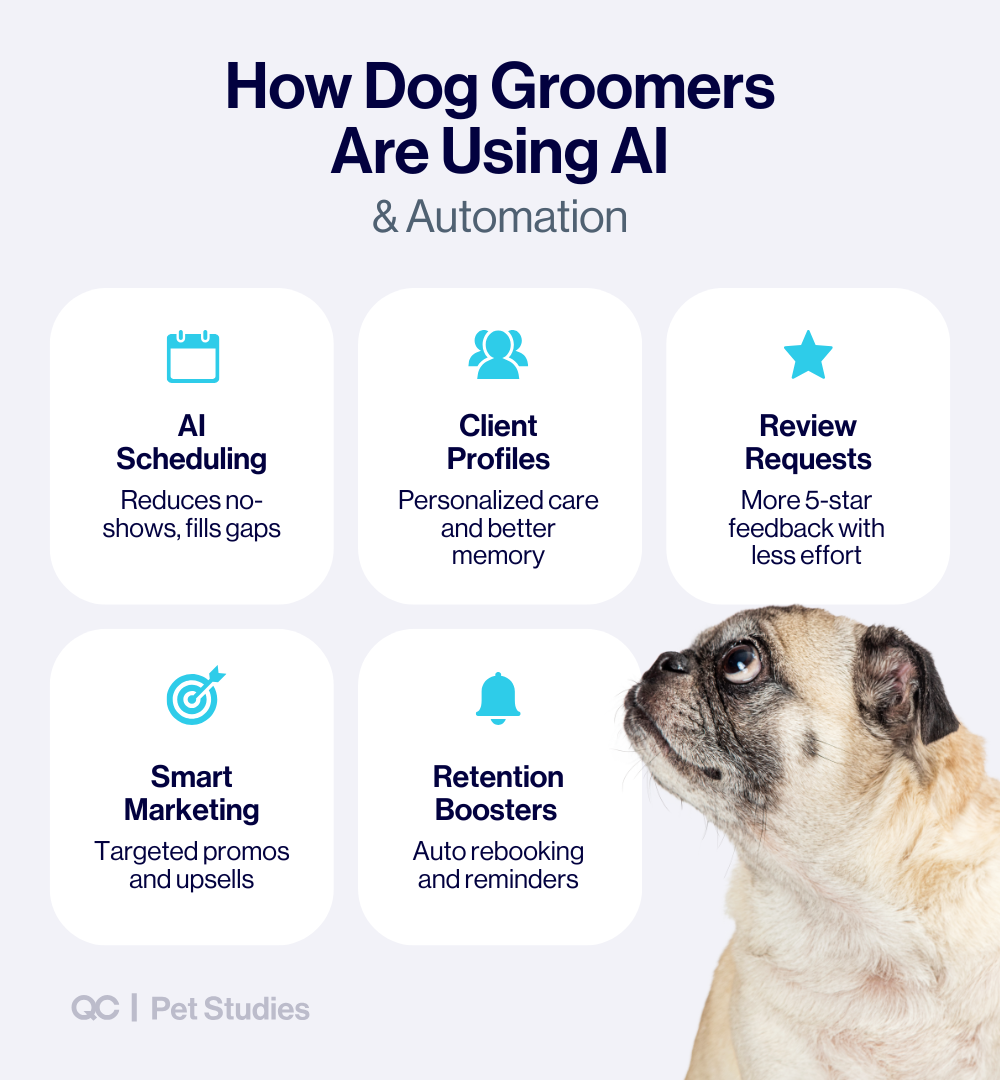
1. Smarter Scheduling and Fewer No-Shows
AI-powered tools can automate appointment booking, send reminders, and even optimize time slots based on past client habits. This reduces no-shows, smooths out your day, and lets you spend more time grooming—not chasing confirmations.
Popular platforms now offer:
- Auto-fill repeat appointments
- SMS/email reminders
- Online rebooking links
- Waitlist management
2. Personalized Client Profiles
Many CRM tools now use machine learning to track client preferences—like shampoo sensitivities, haircut styles, and behavioral notes—so groomers can offer a more consistent, customized experience.
These tools can also flag when a dog is overdue for services, helping groomers proactively re-engage regulars.
3. Automated Reviews and Follow-Up Requests
Want more Google reviews without asking face-to-face? AI-driven review request systems can automatically prompt happy clients to leave feedback—helping boost local visibility and build trust.
Some tools also send post-visit care tips or recommend retail products based on the services completed.
4. Marketing That Works While You Sleep
AI can now help groomers create and schedule emails, SMS promotions, or social media posts that target the right clients at the right time. For example:
- Reminding long-haired dog owners about seasonal shedding
- Offering discounts during slower months
- Promoting add-on services like facials or paw care
This keeps your business top of mind—without taking hours out of your day.
Enroll with QC Pet Studies to get discounts on grooming software.
Book clients, send reminders, track notes, and grow your business—faster and easier.
The Skills Dog Groomers Will Need Most by 2026
Dog grooming is more than brushing and bathing—it’s a blend of technical skill, dog handling, customer service, and business know-how. If you’re serious about turning grooming into a long-term career, you’ll need to build a skill set that keeps up with client expectations and industry standards.
Here’s what matters most heading into 2026—and why each skill helps groomers stand out in a competitive, hands-on field.
1. Hands-On Grooming Technique
This is your core skill set. Whether you work in a salon or go mobile, clients expect you to:
- Bathe and blow-dry efficiently
- Trim nails and clean ears safely
- Brush out mats and dead undercoat
- Perform breed-standard or pet trims with precision
- Handle tools correctly to avoid injury
Great technique leads to safer dogs, happier clients, and smoother workdays.
2. Canine Behavior & Handling
Knowing how to read and respond to dog body language is essential. Groomers who understand behavior:
- Use low-stress handling techniques
- Spot early signs of fear or discomfort
- Know how to calm anxious, reactive, or senior dogs
- Prevent bites and injuries—for both the pet and themselves
It’s not just about keeping dogs still—it’s about making them feel safe.
Want to feel confident handling any dog?
Our online Dog Grooming course at QC Pet Studies includes training in canine behavior, stress signals, and safe, gentle grooming techniques.
3. Client Communication & Professionalism
Being able to talk with pet parents is just as important as working with dogs. Strong communication helps you:
- Explain grooming options clearly
- Address health concerns with tact
- Set expectations around style, price, and timing
- Build trust and turn first-time clients into regulars
Professionalism = long-term business success.
4. Time Management & Efficiency
Time is money in grooming. The most successful professionals know how to:
- Stay organized and work with purpose
- Avoid falling behind without rushing dogs
- Balance speed with quality
- Know when to say no to unsafe or overly demanding requests
Good time management prevents burnout and keeps the business running smoothly.
5. Comfort with Basic Tech Tools
You don’t need to be techy—but you should feel comfortable using:
- Online booking software
- Client management systems (CRM)
- POS tools or mobile payment apps
- Review request platforms
These tools help streamline your day, improve client experience, and boost repeat bookings.
Is Dog Grooming the Right Career for You?
Dog grooming is a rewarding and creative career—but it’s also physical, detailed, and emotionally demanding. Before you commit, it’s worth thinking about whether your personality, interests, and lifestyle align with the work.
Here’s how to know if grooming might be a great fit—or not the best match.
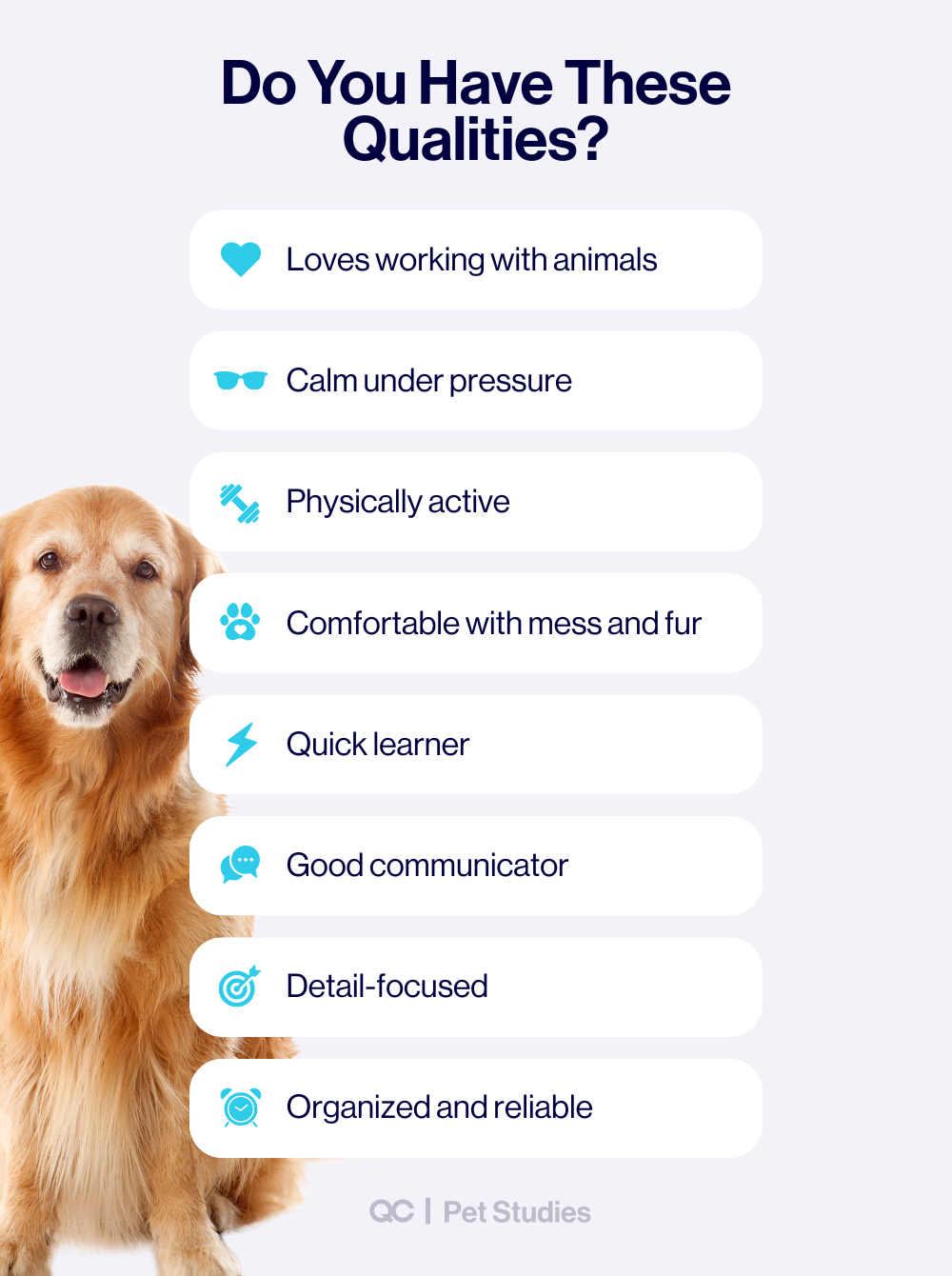
Grooming Might Be Right for You If…
- You love working with animals—even when they’re nervous or messy
- You enjoy hands-on, physical work and staying active
- You’re calm under pressure and can handle barking, wiggling, or tough days
- You’re comfortable with fur, water, smells, and the occasional accident
- You like working independently or in small teams
- You’re curious, coachable, and open to learning new skills
- You’re looking for a career that blends creativity, care, and flexibility
Groomers come from all walks of life—but those who succeed long-term tend to share certain strengths and mindsets.
Grooming Might Not Be the Best Fit If…
- You dislike physical labor or standing for long hours
- You’re highly sensitive to smell, noise, or mess
- You struggle with time management or client interaction
- You’re looking for a low-effort job with quick money
- You prefer quiet, office-based environments
Grooming takes effort—but for the right person, it can be deeply rewarding, both financially and emotionally.
How to Become a Dog Groomer with QC Pet Studies
If dog grooming feels like the right path, QC Pet Studies offers a flexible, online certification course that helps you build real-world skills—without needing to quit your job or commute to a classroom.
What You’ll Learn
The course covers everything you need to get started as a professional groomer:
- Grooming tools, safety, and setup
- Dog anatomy, skin and coat care
- Breed-specific cuts and pet trims
- Bathing, brushing, drying, nail trims, and ear cleaning
- Canine behavior and low-stress handling
- Business basics and optional externship (real salon experience)
You’ll learn at your own pace, with video tutorials, expert feedback, and all materials included.
Start Your Grooming Career
Study online. Learn hands-on grooming. Graduate with your IDGP™ certificate.
Dog Grooming Career FAQs (2026 Edition)
How much do dog groomers make in the U.S.?
In the U.S., dog groomers’ earnings vary by experience, location, and whether they work in a salon or run their own business. According to Glassdoor salary data, the average annual pay for a dog groomer is about $55,000/year, with many roles ranging from roughly $42,000 to $72,000+ depending on region and experience.
Do I need a license to become a dog groomer?
Most U.S. states do not require a formal license to work as a groomer, but many employers and clients value professional training or certification.
How long does it take to become a dog groomer?
With a structured program like QC Pet Studies’ online course, many students complete their training and earn certification in 6–12 months, depending on pace and schedule.
Can AI replace dog groomers?
No. Grooming requires hands-on skill, judgment, and human care that can’t be automated. AI and tech tools can help with scheduling and communication—but not the physical grooming itself.
Is dog grooming physically demanding?
Yes. Groomers spend much of their day standing, bending, lifting dogs, and working with tools. Physical stamina and proper technique are important parts of the job.

 CALL NOW 1-833-600-3751